
![[OFFICIAL]Hoshino Resorts TOMAMU](/assets/common/images/siteid-en.svg)



- text:William Ross
- Published on:2026.08.27
The local link to the Hokkaido Powder Belt
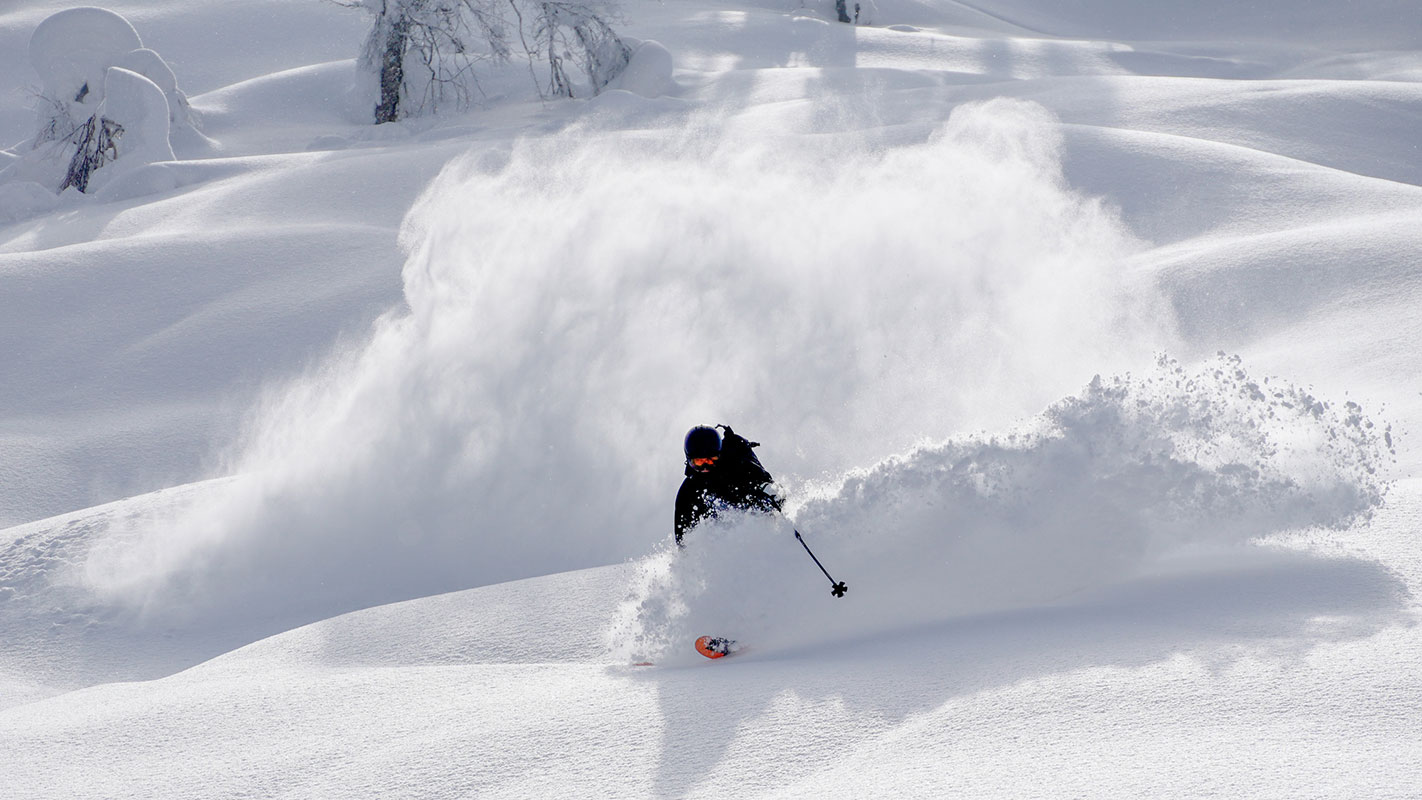
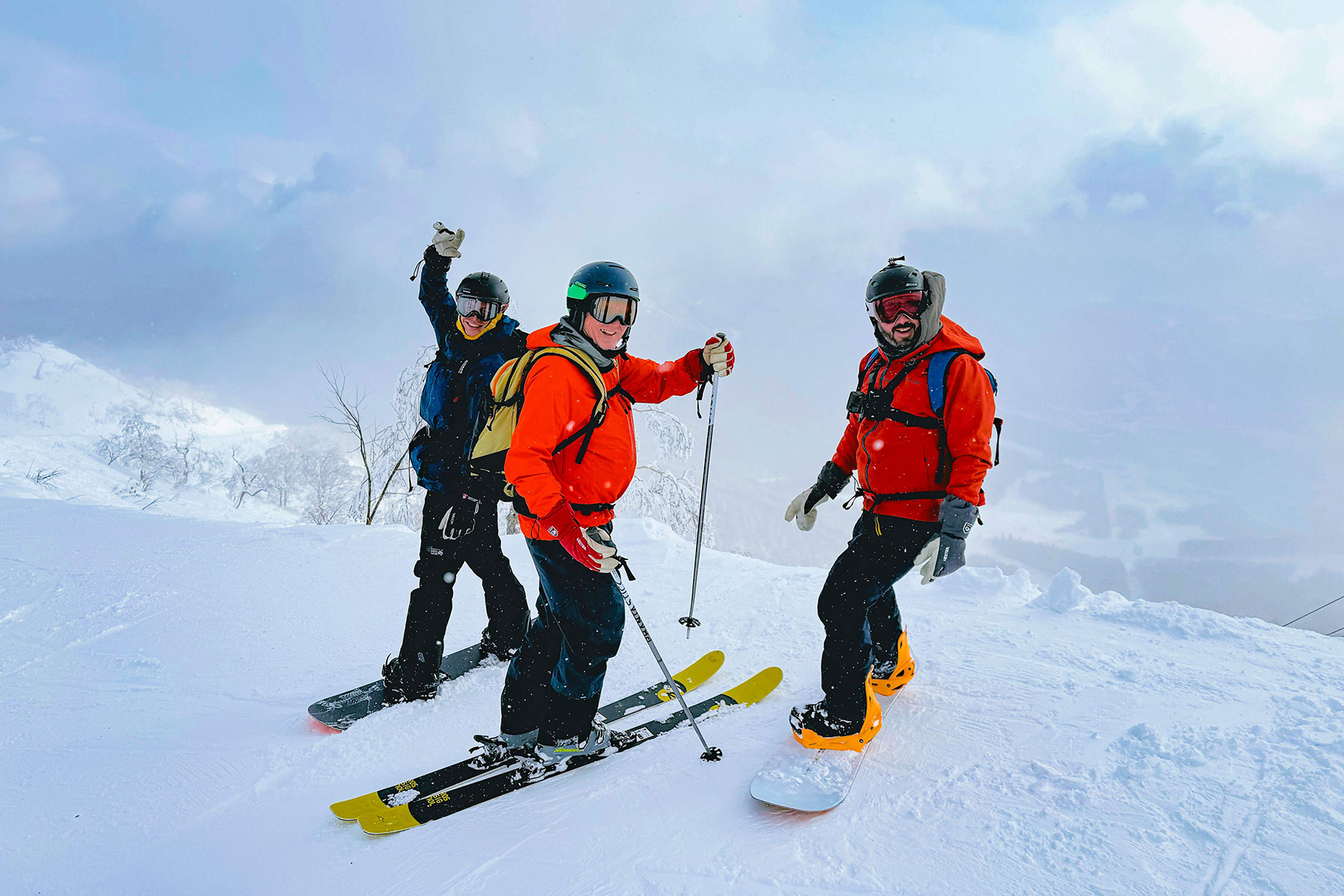
Paul Ellis looks at me with a smile. “I think you’re going to enjoy this,” he says—then launches off into the forest of frosted trees below. I watch for a second, but almost immediately Paul disappears in a cloud of white snow crystals. White smoke; super-light powder snow, billowing up from his snowboard.
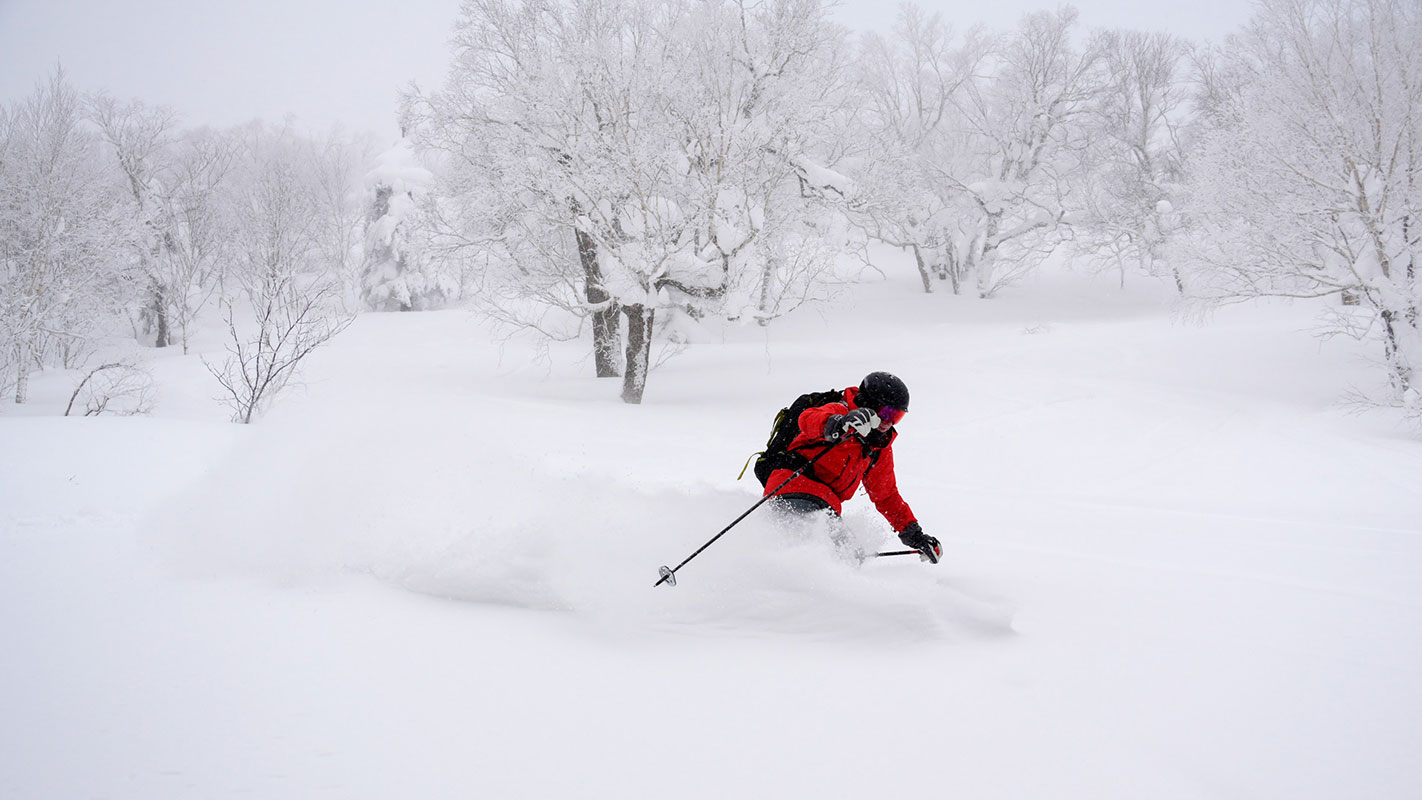
We’re high atop Mt. Tomamu, having just taken an early-morning ride on the cheery yellow Unkai Gondola all the way to the summit. It’s a cold and snowy day, so we couldn’t see much of this beautiful area apart from the slopes right in front of us. Now it’s my turn: I start to slide into the forest of dakekanba (Ermon’s birch) trees, and from the first turn the feeling is of effortless floating, with each turn flowing easily through the soft, deep, cold powder. I rented some wide Vector Glide skis for this trip, and they float beautifully, but the snow is so light and forgiving that I think that one of their narrower pairs would be just fine. I see the trail of powder behind Paul and follow down, arcing easy turns in the snow as we head down to the Powder Express lift for a ride back up to the summit. This is one of the experts-only powder runs here at Tomamu; we’ve traced a deep line in the snow under the gondola and to our left , heading down to the next lift.
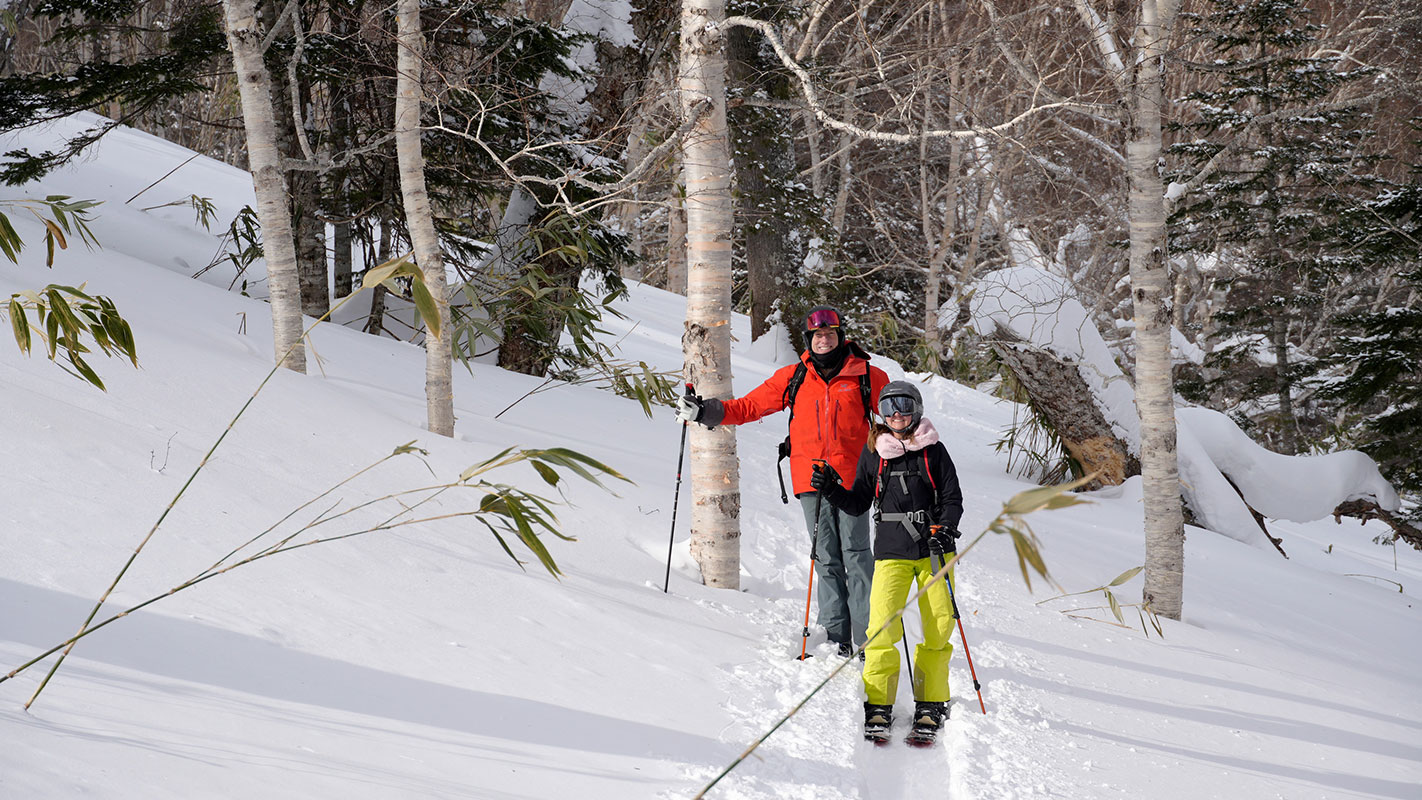
“Welcome to the Hokkaido Powder Belt!” he says, after we stop laughing from the sheer fun of the first run. Tomamu Resort is located in the south-central part of this area renowned for its super-light snow and which also includes Furano, Kamui Ski Links, Asahikawa and Daisetsuzan Kurodake resorts. “We’re located fairly far inland,” Paul explains, “so it’s less humid than in, for example, Niseko, or many of the resorts on Honshu which are closer to the sea. We can also expect quite cold weather here, often -20°C or less, for extended periods.” Bring in cold winter winds, and the result is consistent, high-quality powder snow unlike almost anywhere in Japan—or around the world, for that matter.
The UNKAI Gondola’s name, Paul explains, comes from the phenomenon known as unkai, or the “sea of clouds.” It’s often the case that the summit here will be in the sun while clouds blanket the valley below—a beautiful sea of clouds flowing below. Hence the name, and also why Hoshino Resorts built the UNKAI Terrace at the summit as well—a year-round attraction where guests can sit on high chairs or climb into the Cloud Pool, a netted observation deck extending out over the edge of the mountain. Both provide incredible views of this beautiful natural phenomenon, which occurs in the summer on about 40 percent of days.
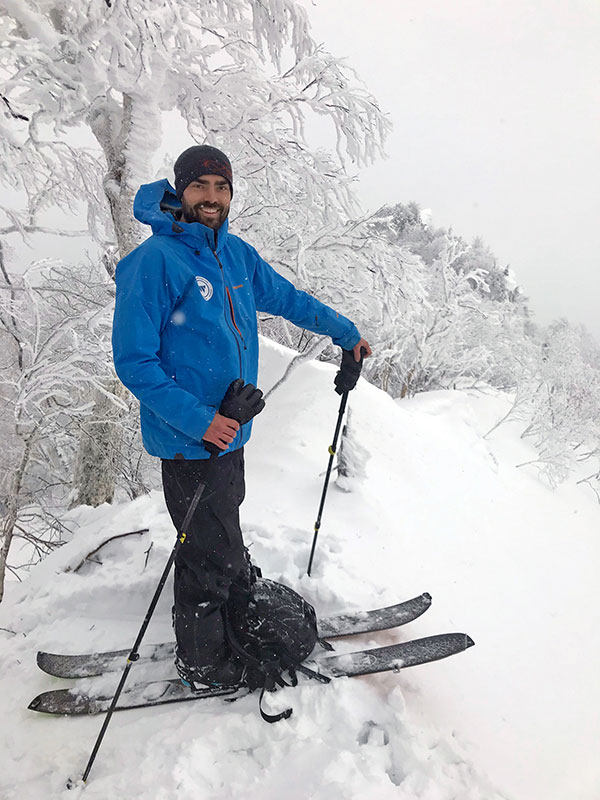
After a second run seeking out some fresh lines through the trees, we head down all the way to the center area, and across to the Tower side of the resort. It’s a gentle traverse at the base, so we have a little time to talk about Paul’s work here as the founder, president, and guide at Whiteroom. Founded here in Furano, the company has become an important part of the snow community here, bringing thousands of guests into the wonders of the Hokkaido Powder Belt.
“I grew up in a family in Australia that didn’t really ski,” he says. “When I was in university I got the ski bug, looked for something to do during our summer holidays (winter in the northern hemisphere) and worked a season in Colorado. That got me into the ski lifestyle, so I did a season in Australia, then another in the US at Lake Tahoe in California.” Today, though, he’s more often a snowboarder, surfing his way through Powder Belt snow.
Fully hooked on riding, he added that there was a family reason that he also wanted to come to Japan. “My mum was born in Tokyo in 1956!” he says. “My grandfather was the general manager of Japan operations for Qantas airlines at the time. She only lived there for a few years, but her passport has her place of birth as Tokyo, and my grandfather always had stories about life in Japan, even about coming to Hokkaido in the 1950s.”
So, when an opportunity came to teach English and history in Furano, Paul jumped at the chance. “That was in 2005,” he says, “and at the time they had maybe 54 foreigners on record as having skied at Furano! Niseko was just starting to get noticed internationally, but Furano was still not yet known at all.”
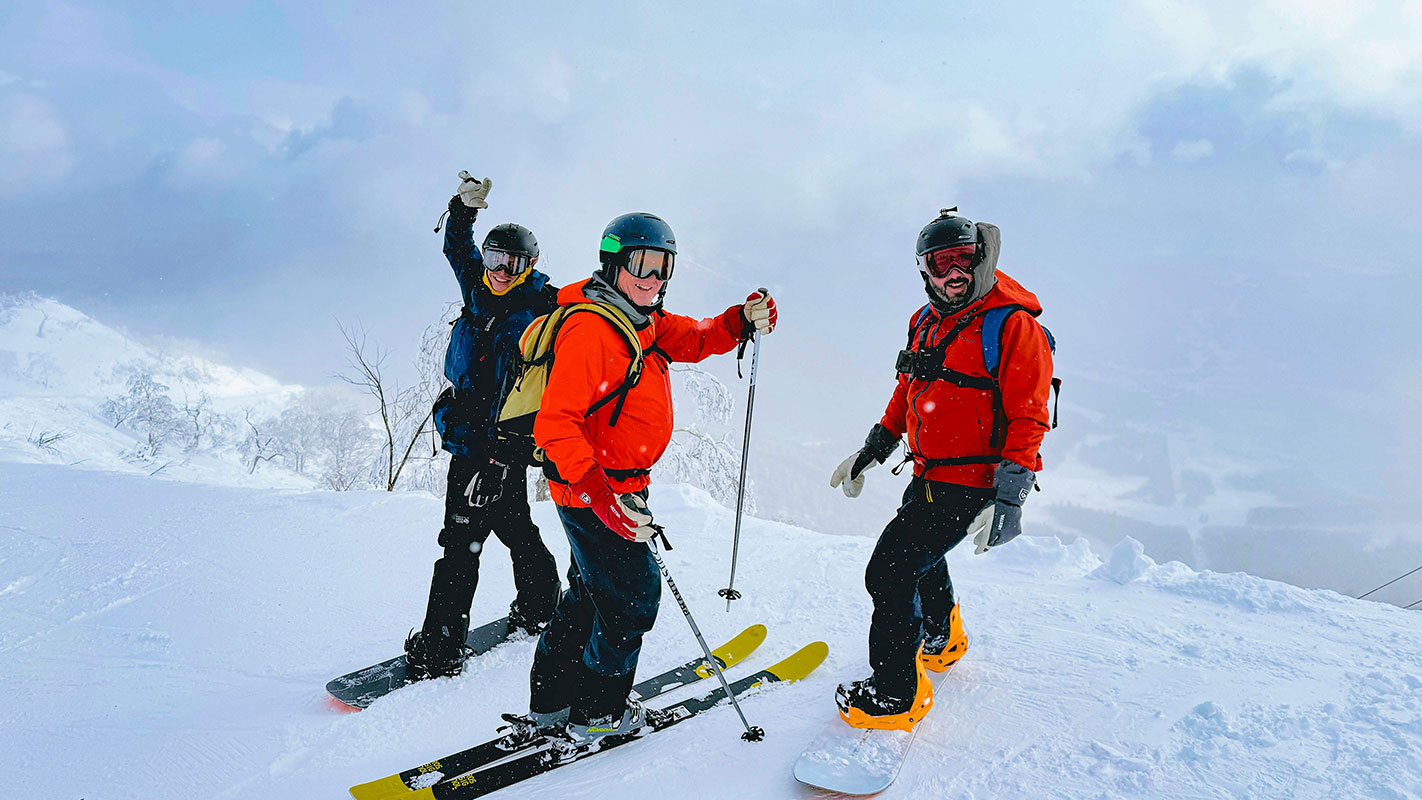
By now we’ve worked our way across to the Tower Express lift, which will get us close to the summit. The snow has let up a bit, so I can clearly see the Tomamu The Tower, the tall twin buildings that are the landmark of Tomamu Resort. Just to the northeast of these are the matching twin towers of Hoshino Resort’s other hotel here, RISONARE Tomamu. Both provide ski-in ski-out access for their guests, as well as great views of the resort and surrounding countryside. I’m excited to head up to this side’s experts-only powder zone, which is wider than that on the previous mountain. Hoshino Resorts has these areas very well thought-out; I was required to download an app with GPS function that lets the patrol know where I am, I must wear a helmet (which I always do anyway), and I had to register and sign a disclaimer form. We will enter through clearly-marked gates, which we will reach after a quick hike up from the lift to the summit.
As we hike up in the refreshing cold, Paul continues to tell me about his links with Furano. “That first year I was doing whitewater rafting in the day and teaching English at night,” he says. “But when that winter came, it was just phenomenal. Everything was snow covered from the end of November and the riding was happening—and I had never ridden in such deep snow.” He was hooked, and friends opened his eyes to backcountry touring, snow safety equipment, splitboards (snowboards that separate into two halves so the boarder can climb up like a skier rather than carry the board on his back while using snowshoes) and everything else about backcountry. “I went to Tomamu, Kamui, Sahoro, Asahidake and Kurodake and just fell in love with the area.”
He knew he couldn’t leave, so he branched out, creating websites for local businesses and governments, then eventually working with others to begin to develop tours for the Powder Belt region. “The first tour I ran was for my local snowboard shop in Australia,” he says. “They had been running tours in Niseko for several years, so I said, ‘You have to come see Furano! There’s no one here, the snow is really light and dry, and it’s the real Hokkaido, real Japan.’ ”
That effort led to Paul working for an Australian travel agent running tours, as well as creating other ski tours in Japan and the US. Whiteroom was started as a separate company in 2010. “Central Hokkaido was where we got started, and it remains our sort of spiritual home,” he says. The company has continued to expand over the years, adding on famous Niseko as well as destinations in northern Honshu, Japan’s main island, as well. “This area is so important to me personally, the snow is so good and the people so lovely—and our tours sell out every year,” he says.
Paul has some work to do in the afternoon, so after one more delightful powder run on my fat powder skis, we agree to meet at one of Paul’s favorite local places that evening. We’re having Japanese food tonight, so after a few more turns I opt for a Rider’s Burger at the airy Tukino restaurant in Hotalu (firefly) Street, a series of small buildings between the two sets of towers. It’s a solid, juicy burger, and just the right thing to get me through a wander around the base area of Tomamu Resort.
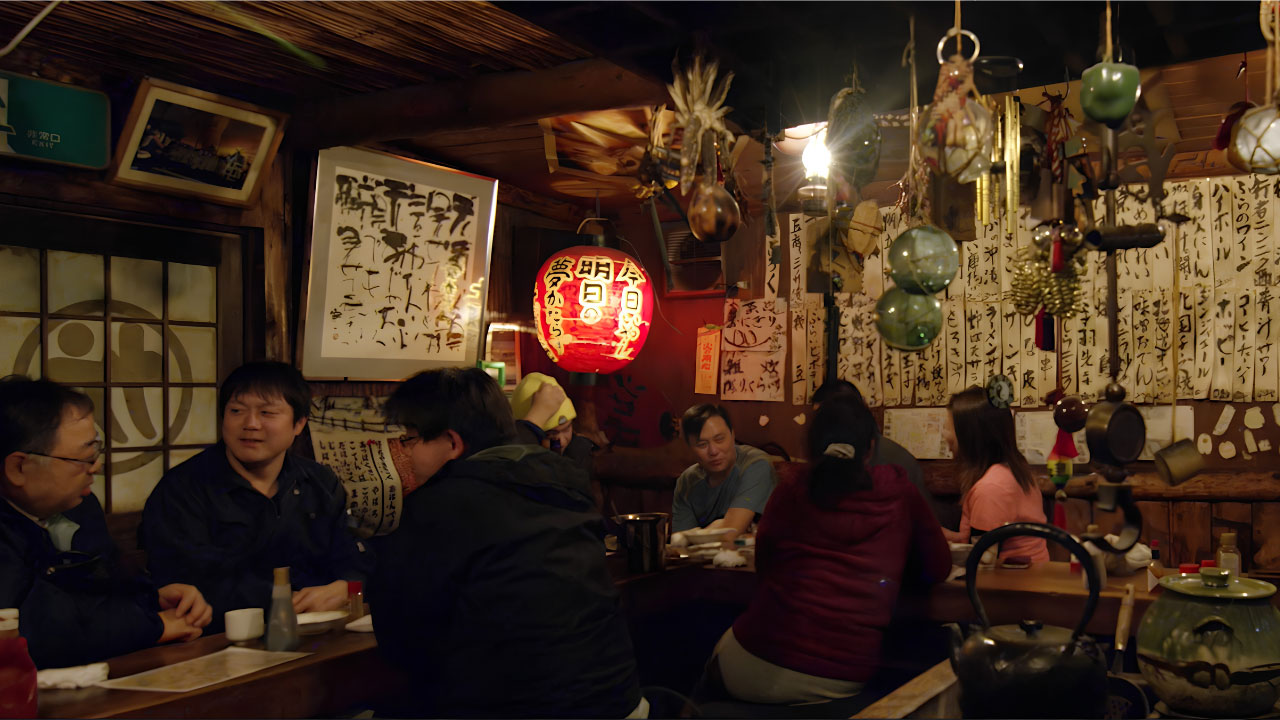
Evening has come, and I arrive at Robata Furano, Paul’s place for our dinner tonight. I already like it at first look, with its rustic wooden front, hand-painted sign (in Japanese only) above the door, and the indigo noren curtains with “Robata” in big white Chinese characters. Inside the at-home Japanese feel continues, with hand-lettered menus on the walls; garlic, fishing floats, farm implements, lanterns and other items hanging from the ceiling; and a square wooden counter wrapping around the room, seating on both sides and a small charcoal-fired irori in the middle. “This is what people want to experience,” Paul says, pouring me some hot saké into my chokko cup. “Unlike a lot of places that have kind of been taking over by foreigners, we have places like Robata that are run by local people, serving local dishes, and where you have to work a little bit to read the menus!” The saké is a great accompaniment to the cold temperatures outside (although I prefer saké cold, and the “master,” the owner/chef, soon recommends some gold local brews), and we happily begin to dig into some grilled chicken, mushrooms and winter cabbage, and a serving of hokke, a Hokkaido fish specialty. I can see why this is a favorite for Whiteroom guests.
Paul still does return to Australia during the Japanese summer. “We have thought about summer activities, but we really want to focus on the winter activities,” explains, adding that, “My summer is pretty much all about getting ready for winter!” Family, though, is very important for him; with a 13-year-old son and 11-year-old daughter who learned to walk in Japan, having them experience Japanese culture is a necessary part of the year. “They were here for six months a few years ago, which was a great experience for them,” he says. “Now they’re here during Australian summer holidays in January, and they get to ski with friends they’ve made over here.”
Come March, and Paul returns to Australia, ready to plan for the next year’s tours in Japan. Even so, as we enjoy one last Kanpai! with some saké, I can see that this region of Hokkaido is not just a part of his work, but an essential part of life—and he also plays an important role in highlighting this great point on the Hokkaido Powder Belt.
